Understanding Temporary Roof Scaffolding Costs
Many clients ask how much a temporary roof will cost, but there is no universal answer. The cost can vary significantly from one project to another due to multiple factors. Giving a flat figure would be misleading because no two structures, access points, or site conditions are ever the same.
A range of elements influence the final cost, including location, property type, access, labour requirements, and materials used. Below, we explain the key considerations that determine pricing and why every project should be individually assessed before a quotation is given.
Factors That Influence Cost
1. Distance from the Road and Site Access
One of the most significant variables in pricing is how close the building is to the road or where scaffold materials can be unloaded.
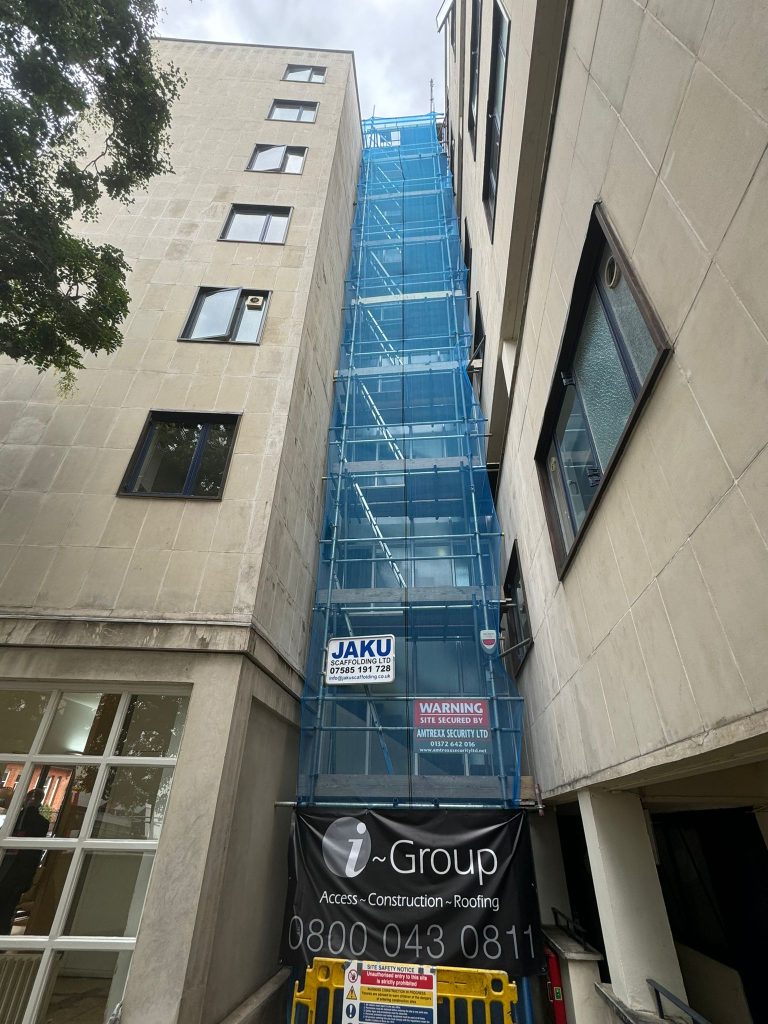
If the property is easily accessible, materials can be transported and erected quickly. However, where access is tight—such as through side alleys, narrow gardens, or courtyards—our operatives may need to manually carry or move tubes and fittings over long distances. This increases both labour time and cost.
2. Labour Effort and Handling
Scaffolding structures involve hundreds of individual components, including tubes, fittings, boards, beams, and trusses.
The more challenging it is to deliver, carry, or lift these materials into place, the greater the level of labour required. Sites that involve multiple manual trips or the use of mechanical lifting equipment such as hoists or cranes naturally take longer to assemble.
3. Height and Building Shape
Taller buildings or properties with irregular shapes require extra scaffolding lifts, additional bracing, and special fittings to ensure stability and safety.
The complexity of the structure directly impacts the time and number of materials needed for safe installation.
4. Roof Design: Static or Rolling
The type of roof design chosen also affects cost:
- Static roofs remain fixed in place and are ideal for straightforward roof repair or replacement projects.
- Rolling roofs are built on track systems that allow sections to slide open or closed, offering greater flexibility for material access but requiring additional engineering and components.
5. Materials Used
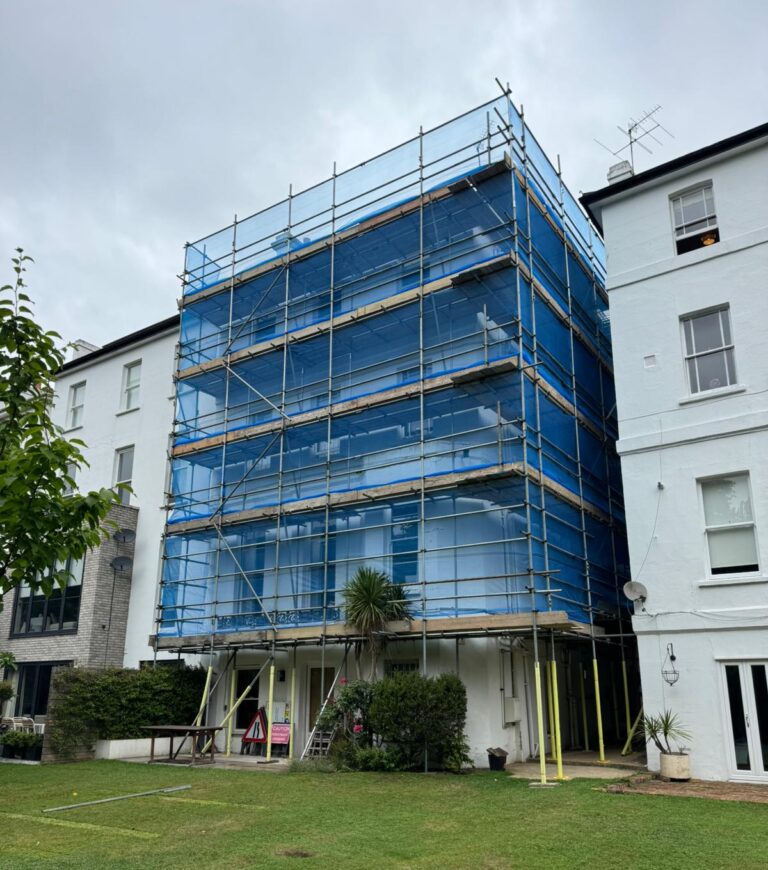
Temporary roof systems can be constructed using a variety of materials, each suited to different site conditions and levels of weather exposure:
- Monarflex sheeting: Standard waterproof covering, suitable for most projects.
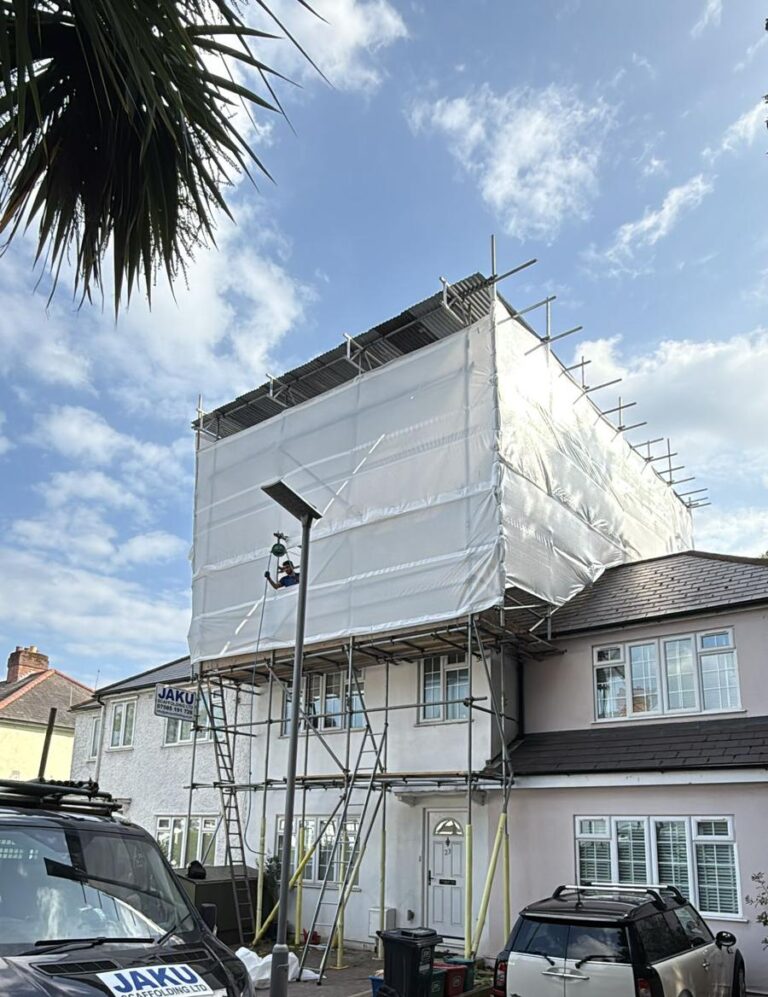
- Shrink-wrap: A sealed, durable film providing tight weatherproof protection.
- Keder sheets: High-tension, wind-resistant panels, ideal for exposed or high-level structures.
Each material type carries different performance and cost implications depending on project duration and environment.
6. Location
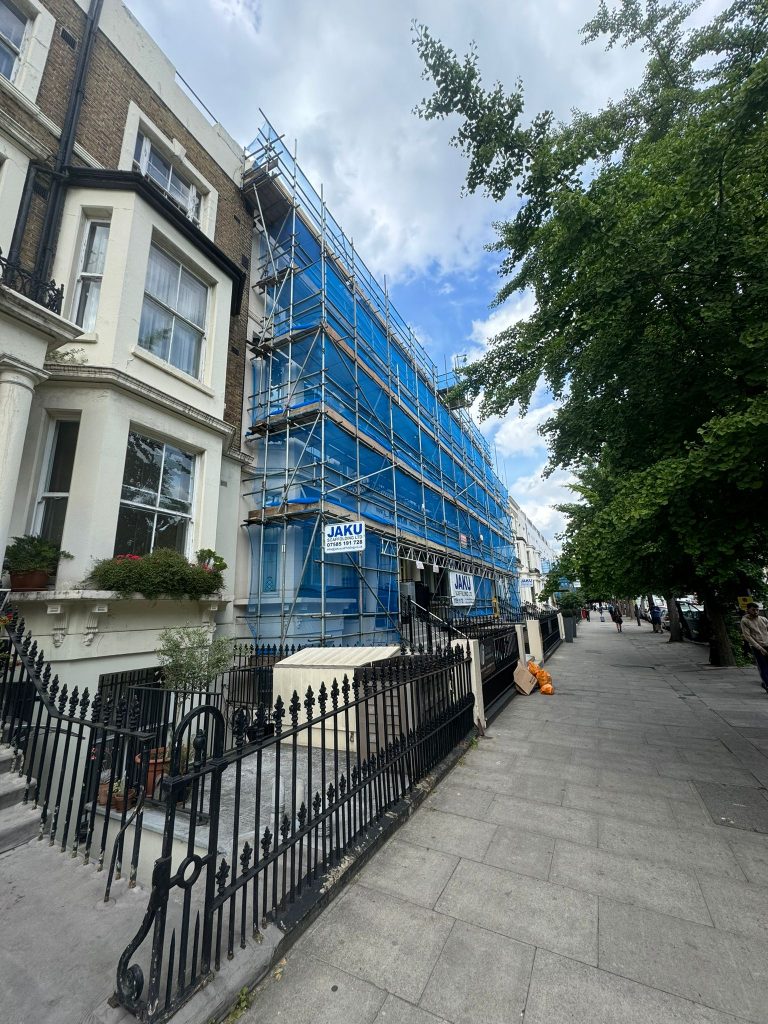
Sites in central London often involve additional costs due to limited space, parking restrictions, and the requirement for local council scaffolding permits.
In contrast, suburban or rural sites usually allow for easier access and more straightforward logistics, which can reduce labour time.
7. Engineering Design and Compliance
Some projects—particularly large or structurally complex ones—require engineer-designed drawings and NASC-compliant scaffolding designs following TG20:21 and SG4:22 guidelines.
These ensure the temporary roof is structurally sound and capable of withstanding external forces such as wind uplift. Although design and verification add to the upfront cost, they are essential for safety, compliance, and peace of mind.
8. Duration of Hire
Hire duration can also influence cost. At Jaku Scaffolding, every installation includes 12 weeks of free hire as standard — at no extra cost.
This provides clients with sufficient time to complete their works without the worry of unexpected hire extensions or additional weekly charges.
Why Costs Can’t Be Generalised
While some companies publish average rates per metre, these figures can be misleading. Two projects of identical size can have completely different overall costs because of factors like access, design, and labour conditions.
For example:
- A property located directly on the street might be completed swiftly with minimal handling.
- A similar-sized property set 30 metres back, requiring materials to be carried through narrow paths or gardens, can take twice as long to erect.
- Urban locations may also require extra safety precautions, road permits, or traffic management measures, all of which affect final pricing.
Because of these variations, the only way to provide a realistic and accurate quotation is through a site visit or a detailed review of architectural drawings. This ensures the price reflects the true complexity, access, and requirements of the project.
Building Confidence Through Clarity
Understanding what shapes the cost of a temporary roof scaffold helps clients plan effectively and make informed decisions. At Jaku Scaffolding, transparency is central to everything we do — from our first site assessment to the final handover.
We take the time to evaluate every detail, providing clear explanations, detailed breakdowns, and reliable timelines. With over a decade of experience and a reputation for safety and precision, we ensure that every structure is designed to meet your project’s unique requirements — efficiently, safely, and cost-effectively.
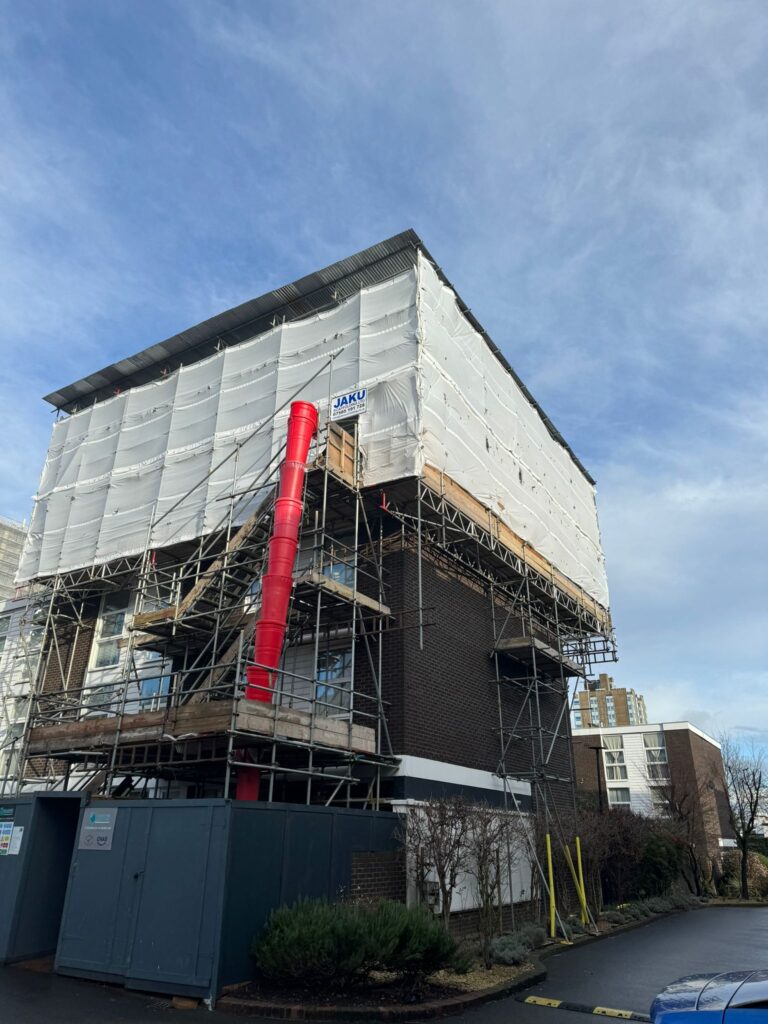
Contact us today to arrange a free consultation or quotation. Every installation includes 12 weeks of free hire as standard, ensuring exceptional value and peace of mind from start to finish.